
Online Crash Courses About Palestine
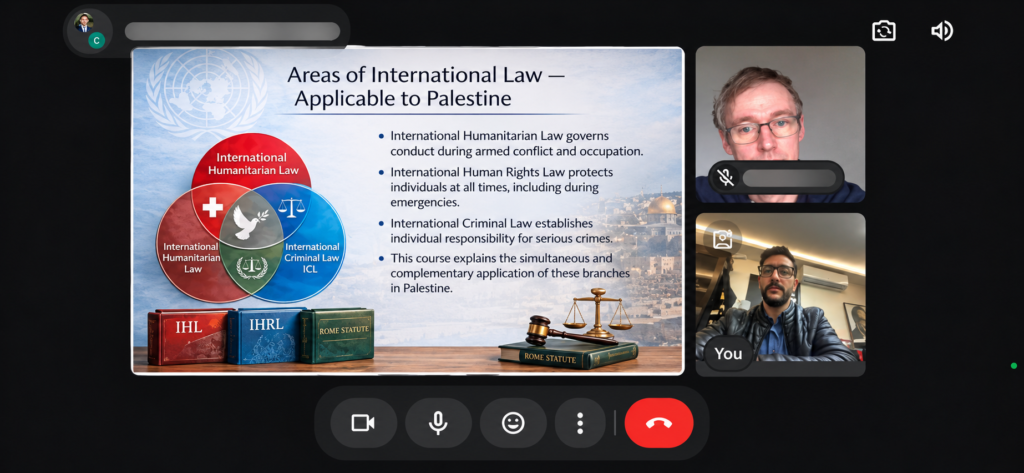
Are you interested in understanding Palestine beyond the headlines? Would you like to learn about Palestinian history, human rights, refugee experiences, media representation, healthcare, and the legal situation through direct conversations with Palestinian speakers? Go Palestine’s Online Crash Courses About Palestine offer an opportunity for international participants to explore the social, cultural, historical, and political realities of Palestinian life without needing to travel.
These short educational courses are designed for students, researchers, journalists, professionals, volunteers, and anyone interested in developing a deeper understanding of Palestine. Through interactive online sessions, discussions, and opportunities to engage with Palestinian perspectives, participants can explore important topics, ask questions, and gain insights into the challenges, experiences, and aspirations of Palestinian communities.
What Are the Online Crash Courses About Palestine?
Our Online Crash Courses are short, topic-focused educational programs designed to introduce participants to important aspects of Palestinian society. Rather than requiring a long-term academic commitment, these courses allow learners to explore specific subjects through accessible online sessions.
Each course focuses on a particular topic, providing historical background, relevant concepts, personal perspectives, and opportunities for discussion. Depending on the course, sessions may include presentations, case studies, recommended readings, and interactive conversations with Palestinian educators, professionals, or community members.
Participants can explore individual subjects or combine several courses to develop a broader understanding of Palestine.
1. Human Rights in Palestine – Online Crash Course
The Human Rights in Palestine course introduces participants to important human rights issues affecting Palestinian communities. The course explores the relationship between human rights, international law, military occupation, and everyday life in the West Bank, including East Jerusalem, and the Gaza Strip.
Participants can examine topics such as freedom of movement, access to education, housing rights, detention, freedom of expression, and the protection of civilians. The course also introduces the work of Palestinian and international human rights organizations, including their approaches to research, documentation, monitoring, and advocacy.
Topics may include:
- Introduction to international human rights law
- Human rights conditions in the West Bank and Gaza
- Freedom of movement and checkpoints
- Housing, land, and property rights
- Education and access to essential services
- Human rights monitoring and documentation
- The role of local and international organizations
This course is particularly suitable for students of human rights, international relations, law, social sciences, and humanitarian studies.
2. Palestinian Refugees – History, Identity, and Everyday Life
The Palestinian Refugees Online Crash Course explores one of the most significant aspects of modern Palestinian history. Participants learn about the displacement of Palestinians during the 1948 war, commonly known among Palestinians as the Nakba, as well as further displacement associated with the 1967 war and subsequent events.
The course introduces the historical development of Palestinian refugee communities and their experiences across the Middle East and beyond. Participants can explore refugee camps, education, employment, identity, family histories, and the role of international organizations such as UNRWA.
The course also examines the legal and political debates surrounding refugee rights, return, compensation, and durable solutions.
Topics may include:
- The Nakba of 1948
- Palestinian displacement in 1967
- Palestinian refugee camps
- Refugee identity and intergenerational experiences
- UNRWA and humanitarian assistance
- Refugee rights under international law
- Education, employment, and social challenges
- Palestinian diaspora communities
The course provides opportunities to understand refugee experiences through historical research and Palestinian perspectives.
3. Media and Journalism in Palestine – Online Crash Course
How is Palestine represented in international media? What challenges do Palestinian journalists face, and how do media narratives influence public understanding? The Media and Journalism in Palestine course examines the relationship between journalism, political conflict, digital communication, and public perception.
Participants explore the role of Palestinian media organizations, independent journalists, international news agencies, and social media platforms. The course encourages critical media literacy by examining how different outlets select sources, frame events, verify information, and communicate complex political developments.
Topics may include:
- Introduction to Palestinian journalism
- International media coverage of Palestine
- Media framing and terminology
- Journalism ethics and verification
- Misinformation and disinformation
- Social media and digital storytelling
- Press freedom and journalist safety
- Palestinian voices in international reporting
Participants can compare different media perspectives and develop skills for evaluating sources and understanding reporting challenges. This course is particularly relevant to journalism students, media professionals, researchers, and individuals interested in international communication.
4. Palestinian History – From Ancient Times to the Present
Understanding contemporary Palestine requires knowledge of its long and complex history. The Palestinian History Online Crash Course introduces participants to the historical developments that have shaped the region and its communities.
The course explores different historical periods, including Ottoman rule, the British Mandate, the emergence of modern Palestinian nationalism, the establishment of Israel in 1948, the 1967 war, and subsequent political developments. Participants also examine the history of Palestinian communities, social movements, and political institutions.
Topics may include:
- Historical Palestine and its communities
- Palestine under Ottoman rule
- The British Mandate period
- Palestinian nationalism and political movements
- The events of 1948 and the Nakba
- The 1967 war and occupation
- The Palestine Liberation Organization
- The Oslo Accords and Palestinian Authority
- Contemporary historical debates
The course aims to provide a structured historical overview while encouraging participants to distinguish between documented events, differing interpretations, and contested narratives.
5. Palestinian Culture, Society, and Traditions
Palestinian culture reflects centuries of history, creativity, community life, and regional diversity. The Palestinian Culture Online Crash Course introduces participants to the traditions, customs, arts, and social experiences of Palestinian communities.
Rather than focusing exclusively on political developments, this course explores the cultural richness of Palestine and the ways Palestinians express identity through everyday life. Participants can discover traditional food, music, literature, embroidery, dance, family customs, and celebrations.
Topics may include:
- Palestinian identity and cultural heritage
- Family life and social traditions
- Palestinian cuisine and food culture
- Traditional embroidery and handicrafts
- Dabke, music, and performing arts
- Palestinian literature and storytelling
- Religious and cultural diversity
- Cultural preservation and contemporary creativity
This course is suitable for travelers, students, artists, educators, and anyone interested in learning about Palestinian culture.
6. Healthcare and Public Health in Palestine
The Healthcare in Palestine Online Crash Course introduces participants to the structure, challenges, and realities of the Palestinian healthcare system. The course explores healthcare services in the West Bank and Gaza, including the roles of public hospitals, private providers, community organizations, and international humanitarian agencies.
Participants can examine how movement restrictions, conflict, economic conditions, infrastructure damage, and resource shortages affect healthcare delivery. The course may also address mental health, emergency medicine, maternal healthcare, disability services, and public health initiatives.
Topics may include:
- Overview of the Palestinian healthcare system
- Healthcare in the West Bank and Gaza
- Access to hospitals and specialized treatment
- Movement restrictions and medical referrals
- Emergency and humanitarian healthcare
- Mental health and psychosocial support
- Public health and community health initiatives
- The role of Palestinian medical professionals and NGOs
This course is particularly valuable for medical students, healthcare professionals, public health researchers, humanitarian workers, and individuals interested in global health.
7. The Legal Situation in Palestine – International Law and Everyday Life
The Legal Situation in Palestine Online Crash Course introduces participants to the legal frameworks affecting Palestinians and the complexities of legal administration in the occupied Palestinian territory. The course explores international humanitarian law, human rights law, Palestinian legal institutions, and the effects of different legal and administrative systems.
Participants can learn about the Geneva Conventions, the law of occupation, civil rights, legal procedures, and questions surrounding accountability and access to justice. The course also examines how legal rules and institutions can affect everyday matters such as residency, movement, property, and family life.
Topics may include:
- Introduction to international humanitarian law
- International human rights law
- The legal framework of military occupation
- Palestinian legal institutions
- Israeli military orders and their effects
- Residency and movement regulations
- Land and property disputes
- Detention and due process
- International courts and accountability mechanisms
The course is designed as an educational introduction rather than a source of individual legal advice.
8. Daily Life in Palestine – Society, Communities, and Contemporary Challenges
What does everyday life look like for Palestinians living in different cities, villages, and refugee camps? This course introduces participants to the experiences of Palestinian communities through social, economic, and cultural perspectives.
Topics may include education, employment, transportation, family life, community initiatives, and the ways people navigate changing political and economic conditions. Participants can explore differences between urban and rural communities and learn about local organizations working in education, social development, and community support. The course aims to provide a more personal understanding of Palestinian society beyond simplified media narratives.
Learn Through Interactive Online Sessions
Go Palestine’s Online Crash Courses are designed around the idea that meaningful learning involves conversation, questions, and engagement. Depending on the selected topic and available speakers, sessions may include:
- Live online presentations
- Interactive discussions
- Conversations with Palestinian professionals and community members
- Historical and social case studies
- Recommended articles and educational materials
- Question-and-answer sessions
- Opportunities for intercultural exchange
Participants are encouraged to ask questions, examine evidence, and engage respectfully with different perspectives.
Who Can Join the Online Crash Courses About Palestine?
Our online courses are intended for a broad international audience, including:
- University and college students
- Human rights and international law students
- Journalists and media professionals
- Healthcare and public health students
- Social workers and educators
- NGO and humanitarian professionals
- Researchers and academics
- International volunteers
- Travelers preparing to visit Palestine
- Anyone interested in Palestinian history, society, and culture
Participants do not necessarily need previous academic knowledge of Palestine to join introductory courses.
Why Study Palestine Online with Go Palestine?
At Go Palestine, we believe that understanding a society requires more than reading headlines or watching news reports. Our educational approach aims to connect international learners with Palestinian knowledge, experiences, and perspectives. Through online crash courses, participants can explore important subjects, develop critical understanding, and engage with questions about history, culture, human rights, and contemporary life.
Go Palestine seeks to make these educational experiences accessible to people who may not be able to travel to Palestine but still want to learn directly from people connected to the region. The courses are intended to encourage informed discussion, cultural understanding, and thoughtful engagement with complex issues.
Flexible Learning Opportunities
Online crash courses are particularly suitable for participants who want to explore specific topics without committing to a full academic semester. Depending on availability, courses may be arranged as individual sessions, short series, or combined educational programs.
Participants interested in several subjects can inquire about creating a learning schedule that covers multiple areas. Course duration, teaching format, available speakers, fees, and scheduling are confirmed before registration.
Frequently Asked Questions
Do I need previous knowledge of Palestine?
No. Introductory crash courses are designed to be accessible to participants who are new to the subject.
Are the courses available online?
Yes. The courses are intended for online participation, allowing learners to join from different countries.
Can I choose a specific subject?
Participants can inquire about individual subjects such as human rights, refugees, history, media, healthcare, law, or Palestinian culture.
Are the courses suitable for university students?
Yes. The topics are relevant to students in history, political science, international relations, law, journalism, public health, and Middle Eastern studies.
Can groups arrange customized courses?
Group arrangements and customized topics may be discussed with Go Palestine, subject to instructor availability.
Are the courses political or educational?
The courses are designed as educational experiences that introduce historical context, Palestinian perspectives, legal frameworks, cultural knowledge, and evidence-based discussion. Participants are encouraged to ask questions and think critically.
Join Go Palestine’s Online Crash Courses
Discover Palestine through education, conversation, and cultural exchange.
Whether you want to understand Palestinian human rights, explore refugee experiences, examine media coverage, learn about Palestinian history, or investigate healthcare and legal issues, our online crash courses offer an accessible starting point.
Join Go Palestine’s Online Crash Courses About Palestine and explore the history, people, culture, and contemporary realities of Palestine from anywhere in the world.
Contact Go Palestine to learn more about available subjects, online schedules, course fees, and registration.